
Pan-United Corporation Ltd
Ready-mix concrete, cement and integrated supply chain — Singapore's leading building-materials supplier
- 65%Right-motor vibration amplitude reduced
- 70%Inspection scope narrowed
- 30%Misdiagnosis-driven rework cost cut
About the customer
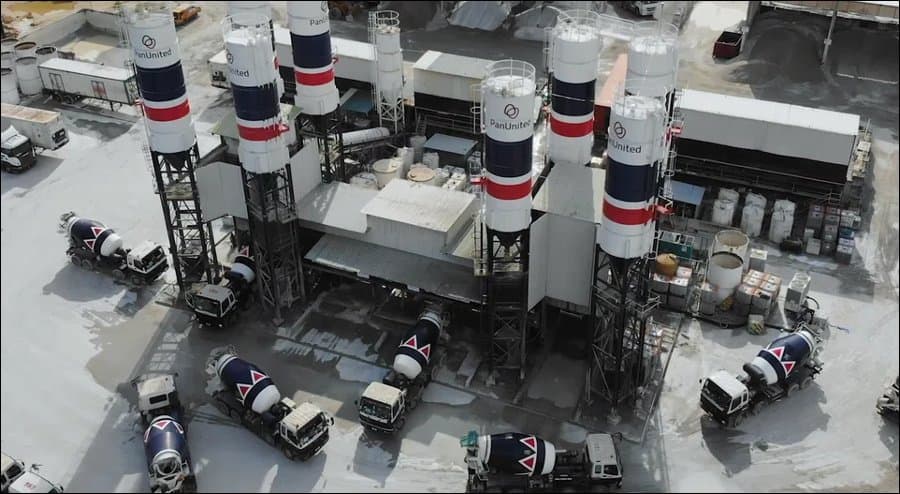
Pan-United Corporation Ltd (SGX:P52) is one of Singapore's leading concrete and cement suppliers, with operations spanning ready-mix concrete, cement, integrated supply chain, and a growing low-carbon concrete portfolio. Their batching plants are time-critical: concrete sets within hours of leaving the plant, so any unplanned mixer downtime translates almost immediately into delivery failures on downstream sites. In one batching plant, the heart of the mixing chamber is a twin-motor V-belt drive — two identical motors mounted symmetrically on an inclined 45° support, driving the mixer through V-belts and a common pulley assembly. Because the configuration is mechanically symmetric, the two motors should produce comparable vibration signatures. They didn't.
The challenge
Concrete batching is unforgiving: concrete is mixed to spec, loaded onto a truck, and delivered within a tight window — typically under 90 minutes — before initial setting compromises placement. Lose the mixer for a shift and you don't reschedule the affected batches; you cancel deliveries already promised. For a publicly-listed supplier serving committed construction projects across Singapore, that cascade shows up where quarterly investor presentations notice. Core equipment:
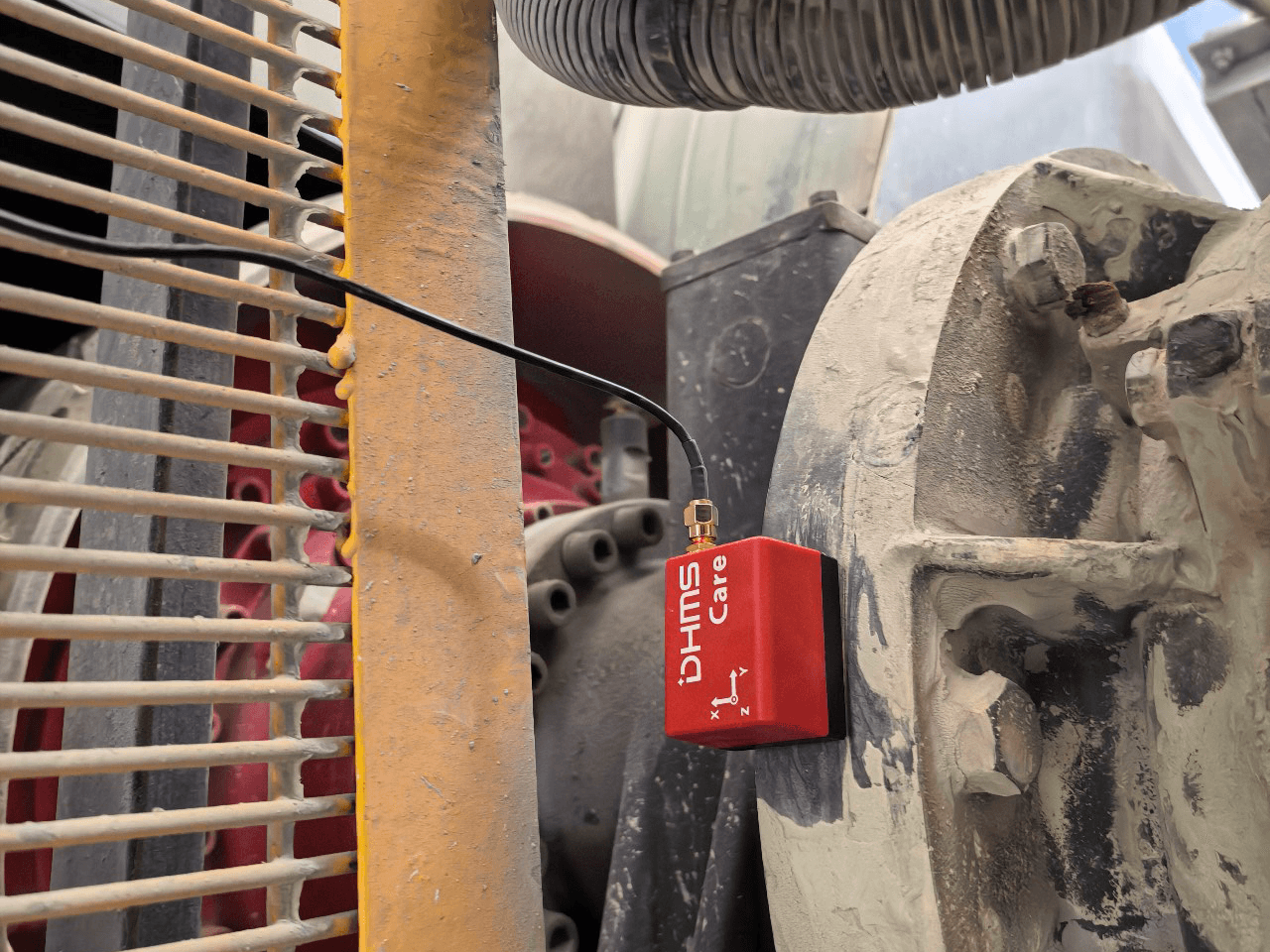
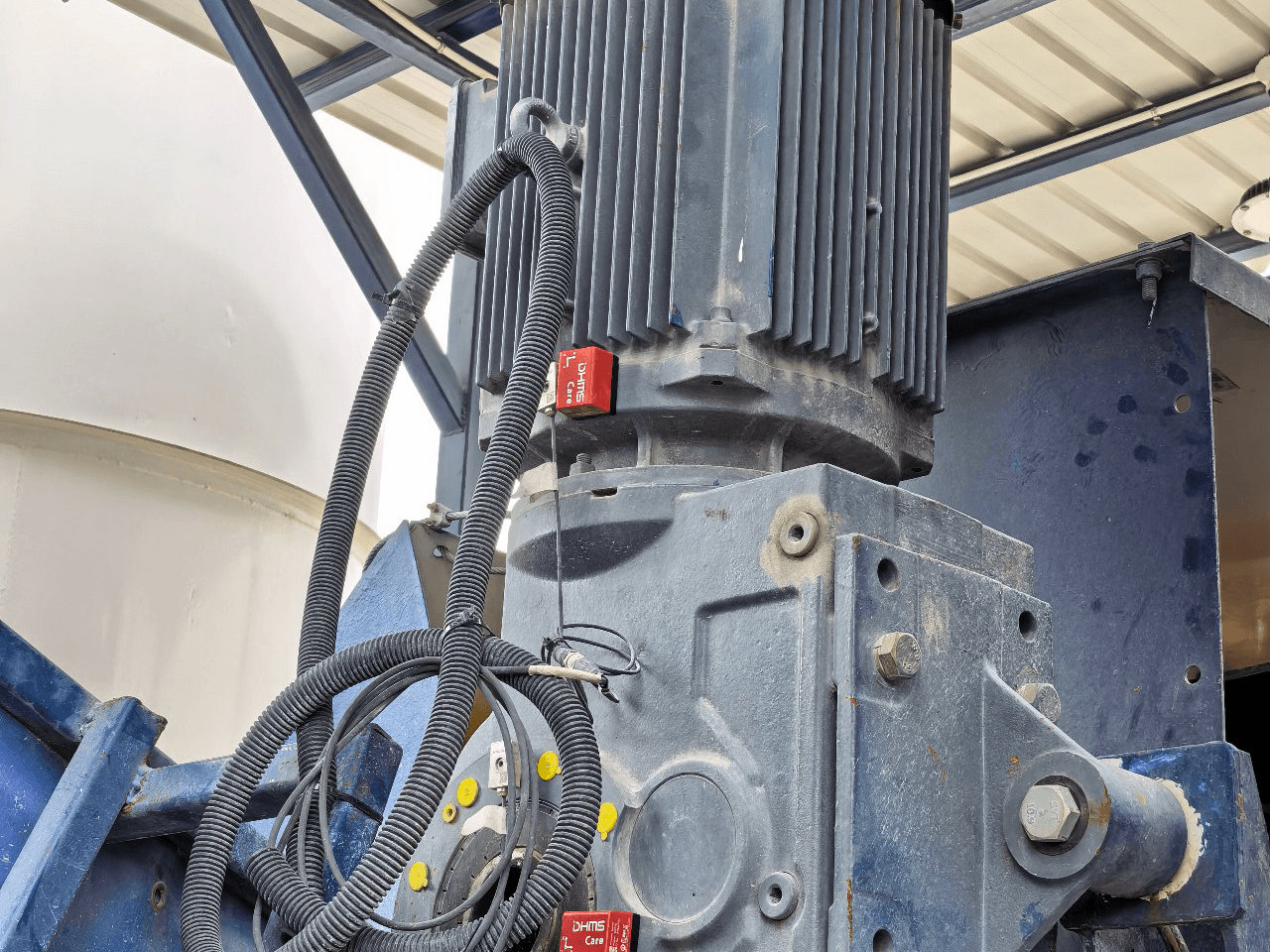
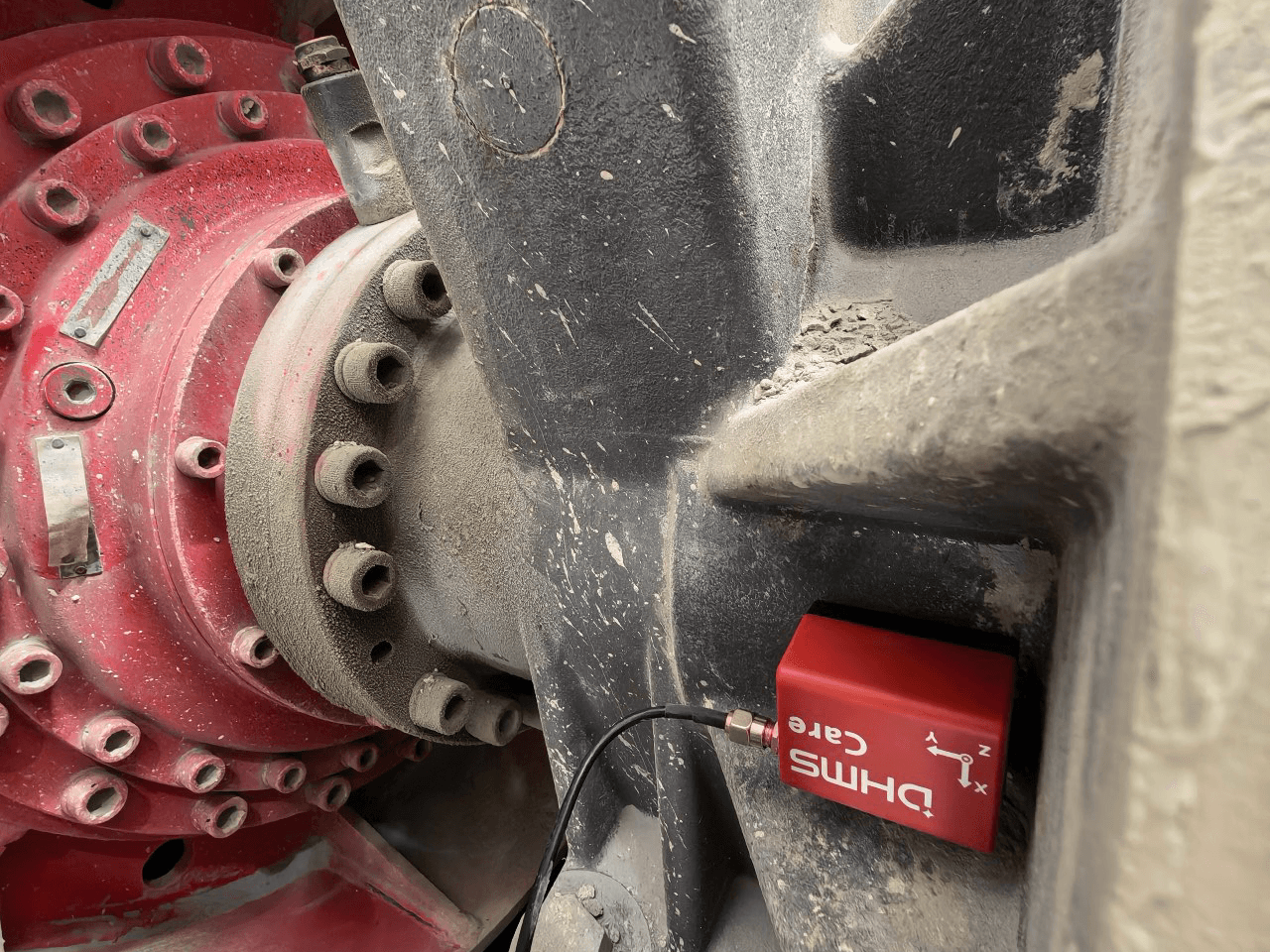
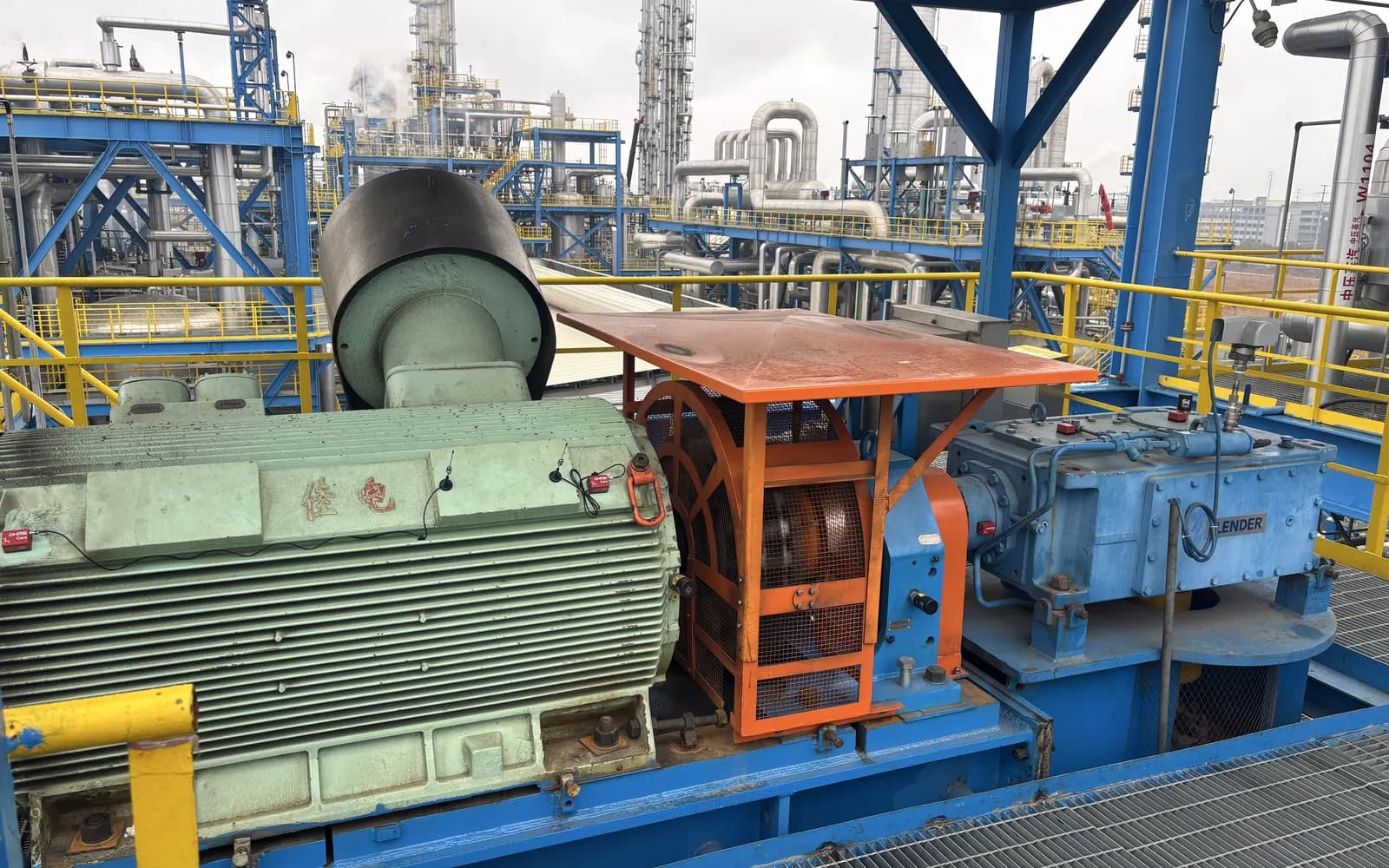
Twin-motor V-belt drive: Two identical motors mounted symmetrically, driving the mixer through V-belts and a common pulley assembly — the power heart of the chamber; the symmetry means both sides should give comparable vibration signatures.
Inclined 45° support and hold-downs: Carries the full dynamic reaction of the motors and pulley assembly; any left-right asymmetry in frame stiffness or foot condition directly amplifies one-sided vibration and changes its spectral character.
On 2026-03-06, before startup, the maintenance team performed the obvious intervention: they adjusted V-belt tension and pulley alignment on both motors and restarted. By every operational standard, the maintenance worked — vertical vibration on the right motor drive end dropped from 8–14 mm/s to 2–5 mm/s (~65%), horizontal dropped about 40%. The machine sounded better and the work order closed. Mina's diagnosis, generated automatically against the next 24 hours of data, disagreed that the case was closed.
Magnitude dropped, axial didn't — a successful repair is not root-cause resolution
After the belt adjustment, vertical and horizontal both responded sharply, but axial — traditionally the most sensitive channel for alignment problems — stayed at 4.5–8 mm/s, essentially unchanged before and after. The repair suppressed the loudest excitation but was masking a more fundamental rotating-train fault: once the belt-driven energy was reduced, what was underneath became visible.
On a symmetric machine, the asymmetry itself is the signal
On a mechanically symmetric machine the two motors should be statistically similar, yet the right side stayed consistently — and in some directions dramatically — louder. The spectrum also redistributed from 55 Hz belt-driven excitation toward 1× running-speed dominance (~22.35 Hz) — a post-repair spectral shift pointing to a definable short-list: residual misalignment, soft foot / base distortion, pulley eccentricity, or right-side support looseness. Diagnostic inference; to be confirmed by on-site teardown and alignment re-check.
Monitored equipment and installation
Products and deployment
- Software ProductDHMSCare - AI Care Version
- Terminal ProductDHMSCare wireless vibration and temperature sensors and smart gateways
- Monitoring scopeTwin-motor V-belt mixer drive (two identical motors + V-belts + common pulley assembly), inclined 45° support frame and hold-downs, concrete mixer, plus motors and pumps, and vertical pumps
Related case studies

Explore plans and packages, or start with a trial.