
Predictive maintenance for optical communications equipment plants
How do we keep the utilities behind clean rooms, SMT lines and test chambers running?
Optical communications equipment plants depend on support systems that run around the clock: compressed air and dryers for SMT and assembly lines, clean-room air-handling fans, chillers and process cooling pumps, and environmental test chambers.
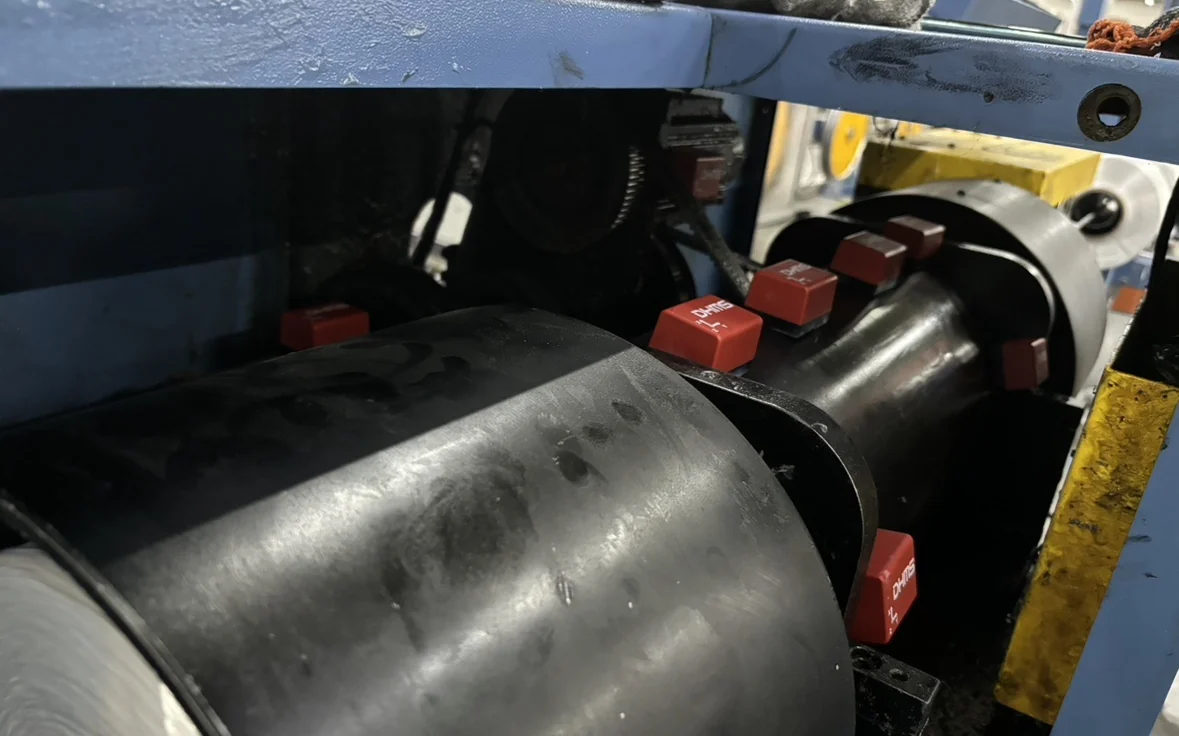
DHMSCare puts wireless vibration and temperature sensors on their motor and bearing housings and compares each asset with its own baseline.
Early wear is flagged before a utility trip stops assembly or test.


Industry challenges
Air-handling fans hold the clean-room environment, so a failed fan disturbs both the environment and the assembly schedule.
SMT placement and assembly tools run on compressed dry air, so one compressor or dryer trip can stop several lines at once.
Environmental test chambers run long cycles, and a compressor failure mid-cycle means the test has to start again.
Chillers, pumps and air handlers sit in plant rooms and on roofs, where manual rounds reach them only occasionally.
Quantifiable value
Monitoring solution
Focus monitoring on the support equipment of an optical communications equipment plant: air compressors and dryers for SMT and assembly lines, clean-room air-handling fans, chillers and process cooling pumps, and test-chamber compressors.
Where the plant also strands fiber or cable, the binders on those lines are monitored the same way, each asset against its own baseline.
Platform
DHMSCare uses AI to identify early fault signs such as gear wear and bearing anomalies, assess equipment health and provide maintenance recommendations.
Recommended measuring points and plan
What a typical production line needs, so you can see the whole plan before we talk.
| Asset | Suggested sensors | Measuring points (bearing seats) |
|---|---|---|
| Air compressor (SMT / assembly) | 3 | Motor and compressor bearing seats |
| Refrigerated air dryer | 2 | Compressor motor bearings |
| Clean-room AHU fan | 2 | Motor and fan bearing seats |
| Chiller | 3 | Motor and compressor bearing seats |
| Process cooling water pump | 2 | Motor DE and NDE bearings |
| Test-chamber compressor | 2 | Compressor motor bearings |
| Stranding binder (if present) | 2 | Yarn-reel motor, bearing block |
Actual quantities are confirmed on site
AI Care
The first plan with AI fault diagnostics, the AI that finds the gear wear and bearing anomalies behind these results.
Choose AI Care Plus for unlimited automatic diagnostics, remaining-life forecasts with Mina Ultra and 24 months data retention.
Smaller teams can start on Care: AI condition monitoring and daily reports with 10 user accounts, then move to AI Care when you need AI fault diagnostics.
Start with one line
The smallest sensible start, then grow line by line or roll out plant-wide.
Watch the machines you can least afford to stop.
You learn about faults days ahead.
All your lines, all sites, on one dashboard.
Tailored to your project's requirements.
Runs on your own servers or private cloud.
Contracted and delivered as a project.
Questions
We are a small or mid-sized company. Is this for us?
Yes. Start with one line and one gateway, subscribe per sensor per year, and begin on AI Care; Care if you only need condition monitoring.
How long does a one-line pilot take?
Installation follows the seven steps in our quick installation guide: create the equipment, mount the gateway, attach the sensors and bind the measuring points. We agree the pilot period with you by line size.
We have no vibration engineer. Can we still use it?
Yes. The AI identifies early fault signs, assesses equipment health and gives maintenance recommendations, and Mina tells you which machine to handle first and why.
Which assets does DHMSCare monitor in an optical communications equipment plant?
The support equipment that production and test depend on: air compressors and dryers, clean-room air-handling fans, chillers, process cooling pumps and test-chamber compressors. Each measuring point takes one wireless vibration and temperature sensor on the outside of the housing, and stranding-line binders can be added where the plant makes cable.
Can one platform cover both utilities and production lines?
Yes. Compressors, fans, pumps and stranding-line binders bind to the same gateway and platform, one sensor per measuring point, and each asset is compared with its own baseline.
Tell us the line and its critical assets; we size the sensors and the plan with you.