
Predictive maintenance for non-ferrous metal mines and concentrators
How can a non-ferrous concentrator predict failures on flotation cells and ball mills?
DHMSCare monitors flotation cells, ball mills, vibrating screens and crushers.
It also covers dust collection fans, belt conveyors, ore discharge equipment and pumps.
A mine typically needs about 100–200 sensors.
Its industrial AI agent combines vibration, temperature and speed signals.
It predicts faults on motors, gearboxes and main shafts.
Industry challenges
Flotation cells, ball mills and other core processing machines are structurally complex. They run in harsh conditions under very heavy loads.
A sudden stop of a core processing machine causes major financial losses. The whole circuit behind it waits for the repair.
Manual condition monitoring is inefficient and labor-intensive. It drives up operating and maintenance costs.
Heavy loads accelerate wear on motors, gearboxes, main-shaft impellers and stators. Without continuous data, there is no effective way to catch it early.
Quantifiable value
Monitoring solution
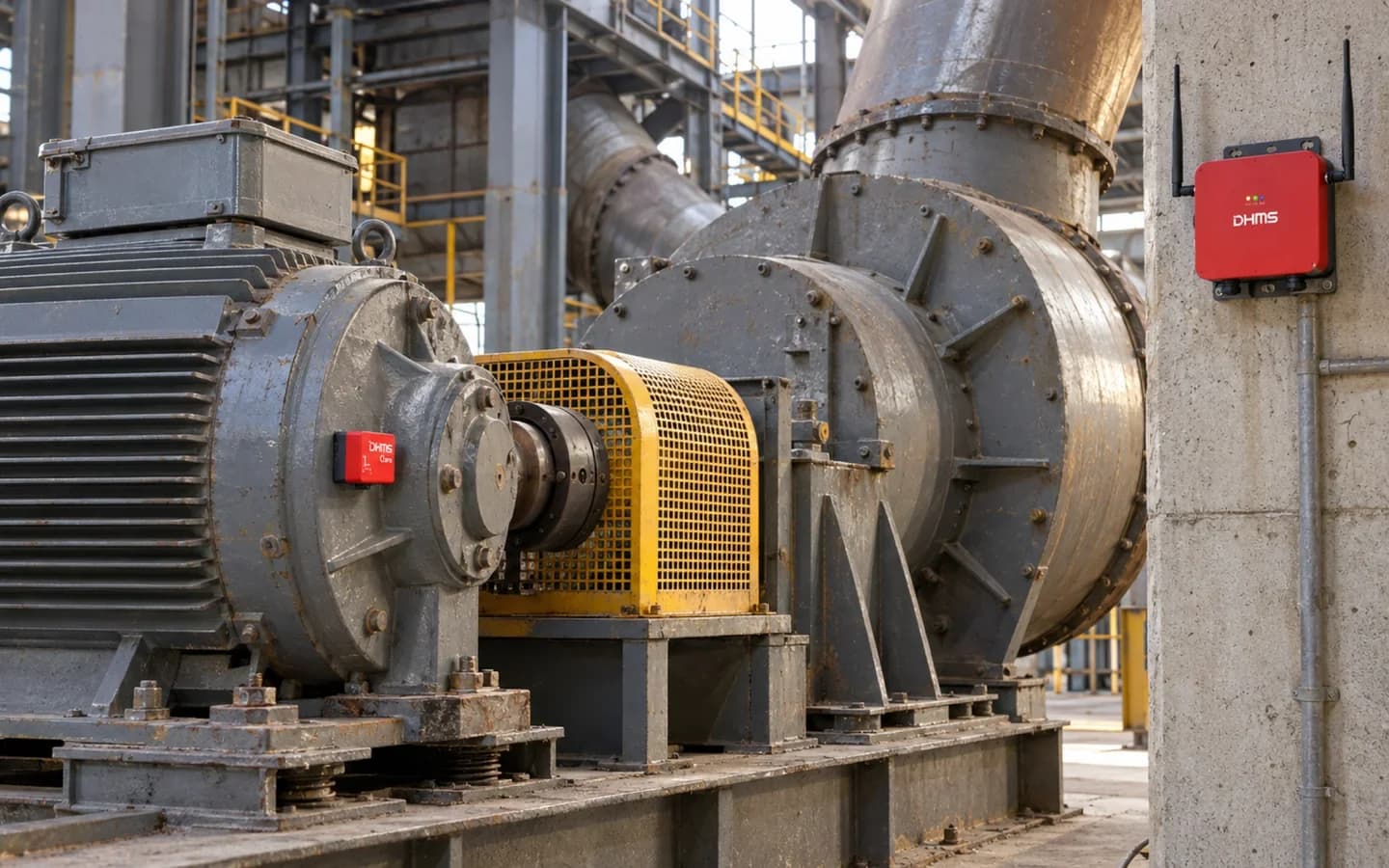
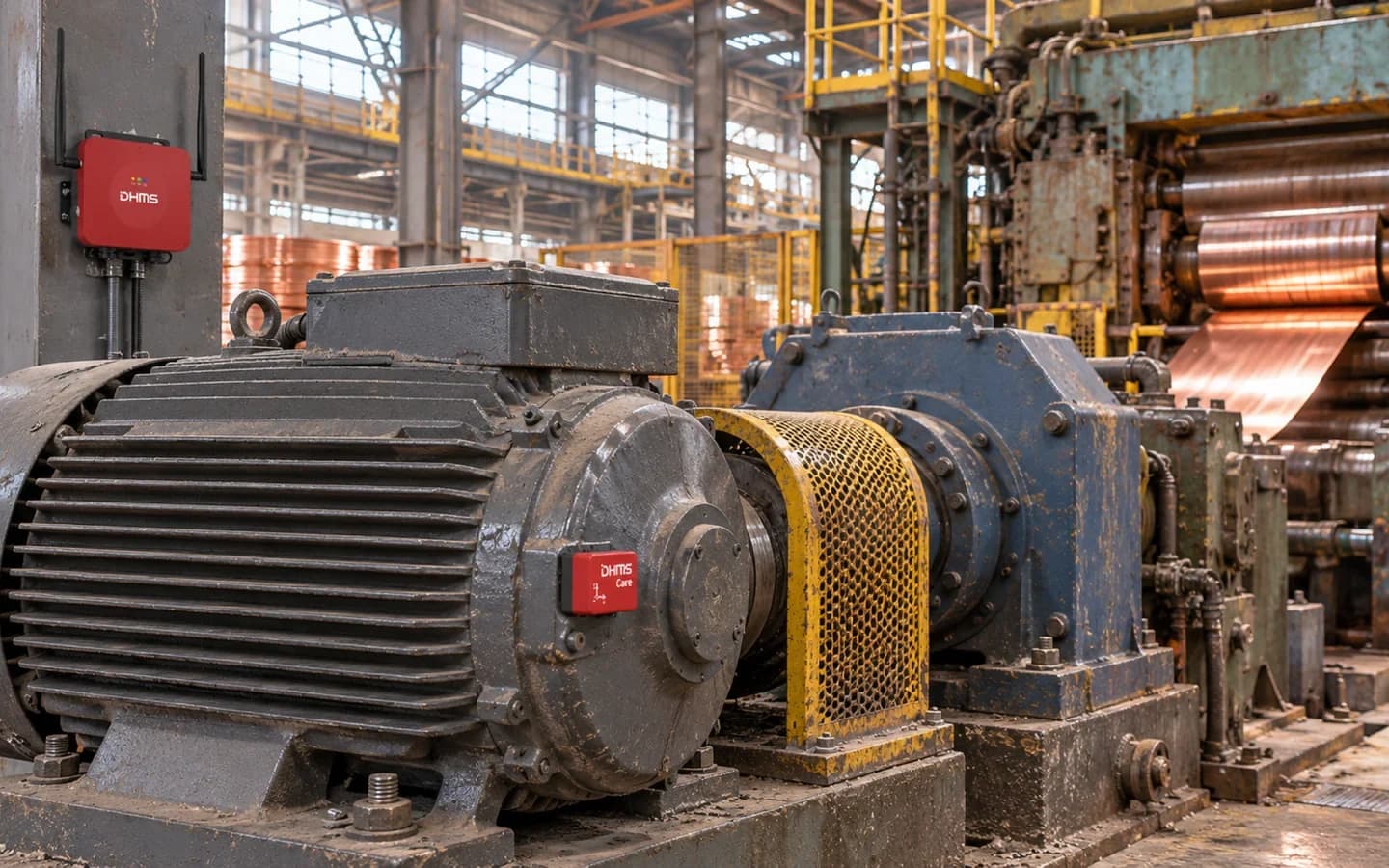
DHMSCare places wireless vibration and temperature sensors and smart data acquisition terminals on flotation cells, ball mills, crushers and the rest of the circuit.
Where a machine needs more, optional wired vibration and temperature sensors, eddy-current displacement sensors and Hall-effect speed sensors are available.
From the day of installation, DHMSCare builds multi-parameter fault models and diagnoses each machine, with no months-long learning period.
Platform
DHMSCare uses AI to identify early fault signs such as gear wear and bearing anomalies, assess equipment health and provide maintenance recommendations.
Recommended measuring points and plan
What a typical production line needs, so you can see the whole plan before we talk.
| Asset | Suggested sensors | Measuring points (bearing seats) |
|---|---|---|
| Flotation cell | 4 | Drive motor DE and NDE, upper and lower main-shaft bearing housing |
| Ball mill | 8 | Main motor DE and NDE, reducer input and output, pinion bearings, feed-end and discharge-end trunnion bearings |
| Vibrating screen | 3 | Exciter bearings on both sides, drive motor |
| Crusher | 4 | Eccentric bearing, main shaft top and bottom, drive motor |
| Dust collection fan | 4 | Drive motor DE and NDE, fan bearings DE and NDE |
| Belt conveyor | 5 | Drive motor, reducer input and output, head and tail pulley bearings |
| Ore discharge equipment | 2 | Drive motor and reducer bearing seats |
| Pump | 4 | Motor DE and NDE, pump DE and NDE |
| Gateway | DMG310 | DMG311 (4G) where there is no Wi-Fi |
| Per mine | approx. 100–200 |
Actual quantities are confirmed on site
AI Care
The first plan with AI fault diagnostics, the AI that finds the gear wear and bearing anomalies behind these results.
Choose AI Care Plus for unlimited automatic diagnostics, remaining-life forecasts with Mina Ultra and 24 months data retention.
Smaller teams can start on Care: AI condition monitoring and daily reports with 10 user accounts, then move to AI Care when you need AI fault diagnostics.
Start with one line
The smallest sensible start, then grow line by line or roll out plant-wide.
Watch the machines you can least afford to stop.
You learn about faults days ahead.
All your lines, all sites, on one dashboard.
Tailored to your project's requirements.
Runs on your own servers or private cloud.
Contracted and delivered as a project.
Can DHMSCare monitor flotation cells, thickeners and ball mills?
Yes. DHMSCare has monitored the motors and gear reducers of large flotation machines and covers ball mills; for slow thickener drives, tell us the shaft speed and we confirm the right sensor first. At an aluminium plant it covers rolling mills, hydraulic presses, drive motors, cooling pumps and exhaust fans.
Questions
We are a small or mid-sized company. Is this for us?
Yes. Start with one line and one gateway, subscribe per sensor per year, and begin on AI Care; Care if you only need condition monitoring.
How long does a one-line pilot take?
Installation follows the seven steps in our quick installation guide: create the equipment, mount the gateway, attach the sensors and bind the measuring points. We agree the pilot period with you by line size.
We have no vibration engineer. Can we still use it?
Yes. The AI identifies early fault signs, assesses equipment health and gives maintenance recommendations, and Mina tells you which machine to handle first and why.
Which equipment should a concentrator monitor first?
Start with the flotation cells and ball mills, because they carry the circuit. Then add the crushers, vibrating screens, belt conveyors, dust collection fans and pumps.
How many sensors does a non-ferrous mine need?
About 100–200 per mine, depending on how much of the circuit you cover. We size the count with you, machine by machine.
Can DHMSCare measure speed and shaft displacement as well as vibration?
Yes. Besides the wireless sensors, DHMSCare offers wired vibration and temperature sensors, eddy-current displacement sensors and Hall-effect speed sensors. Its fault models combine these signals to diagnose motors, gearboxes and main shafts.
View all questions → Help center
Related case studies
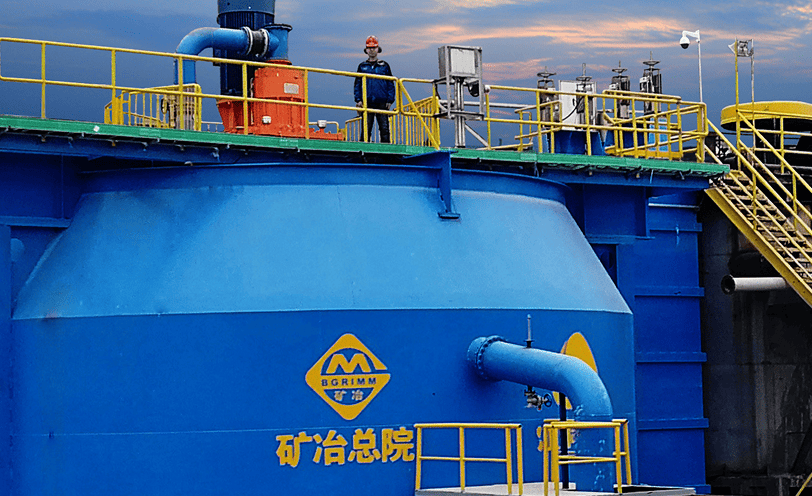 BGRIMM Technology GroupProvides high-performance new-energy materials, intelligent equipment, and modern mining solutionsView case study →
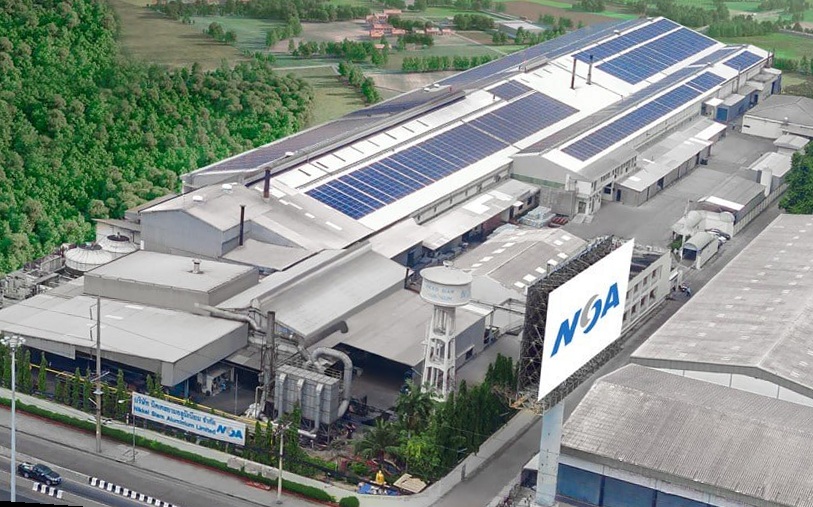 Nikkei Siam AluminiumAluminium products, insulated panels and industrial aluminium profilesView case study →
Nikkei Siam Aluminium: early warning on rolling mills and presses
Nikkei Siam Aluminium, a core overseas production base of Japan's Nippon Light Metal group, makes aluminium products, insulated panels and industrial profiles on lines that run continuously under heavy load. DHMSCare monitors its aluminium rolling mills, hydraulic presses, drive motors, cooling pumps and exhaust fans. In oily, dusty conditions, it helps find hidden failure risks in rolls and hydraulic parts early.
- Cut unplanned downtime by 30–50%
- Cut maintenance costs by 25–30%
- Raise equipment availability by 10–20%
Tell us the line and its critical assets; we size the sensors and the plan with you.