
Predictive maintenance for leather & rubber plants
How can a leather or rubber plant predict compressor, motor and gearbox failures?
DHMSCare monitors screw air compressors, three-phase induction motors and gearboxes.
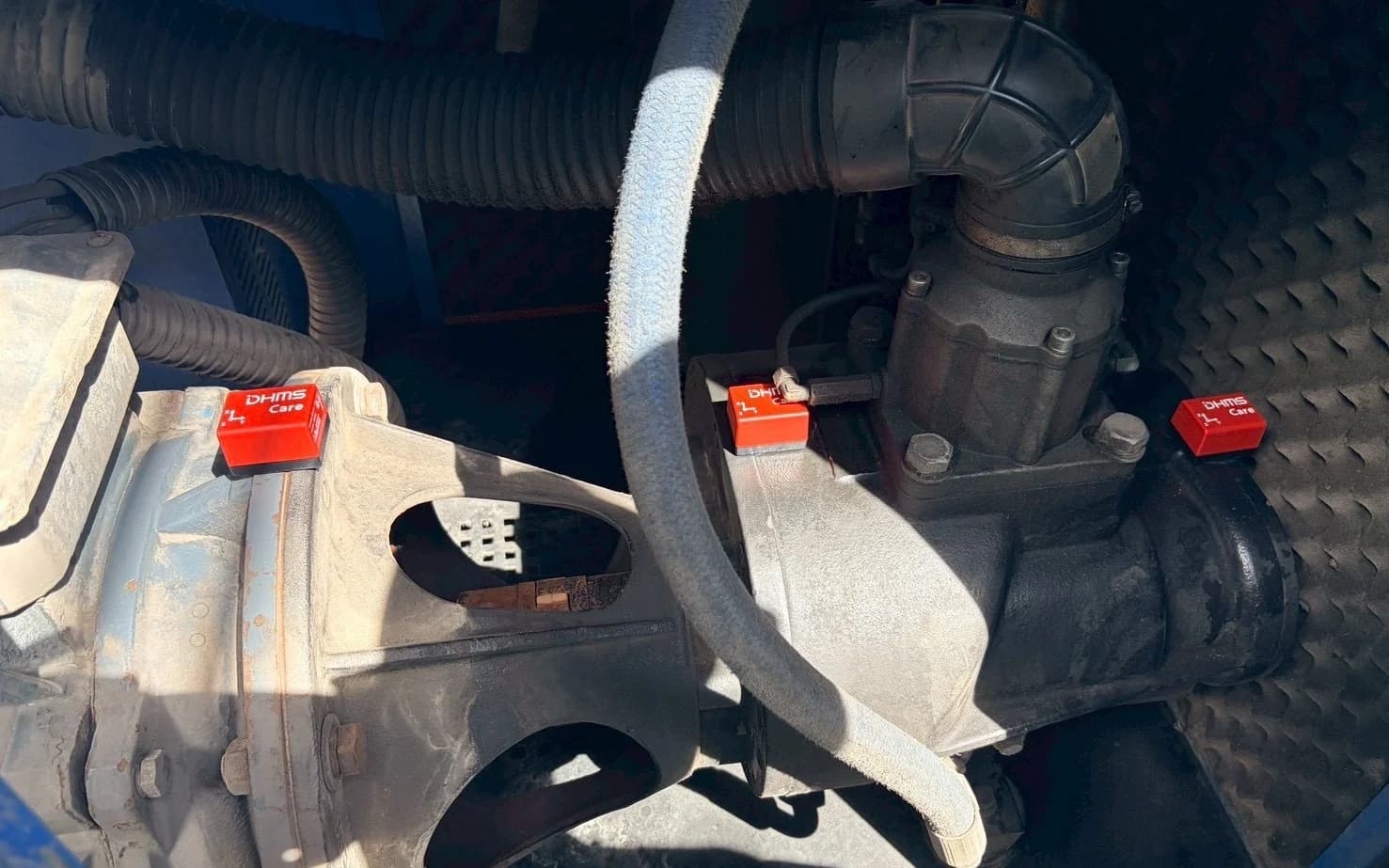
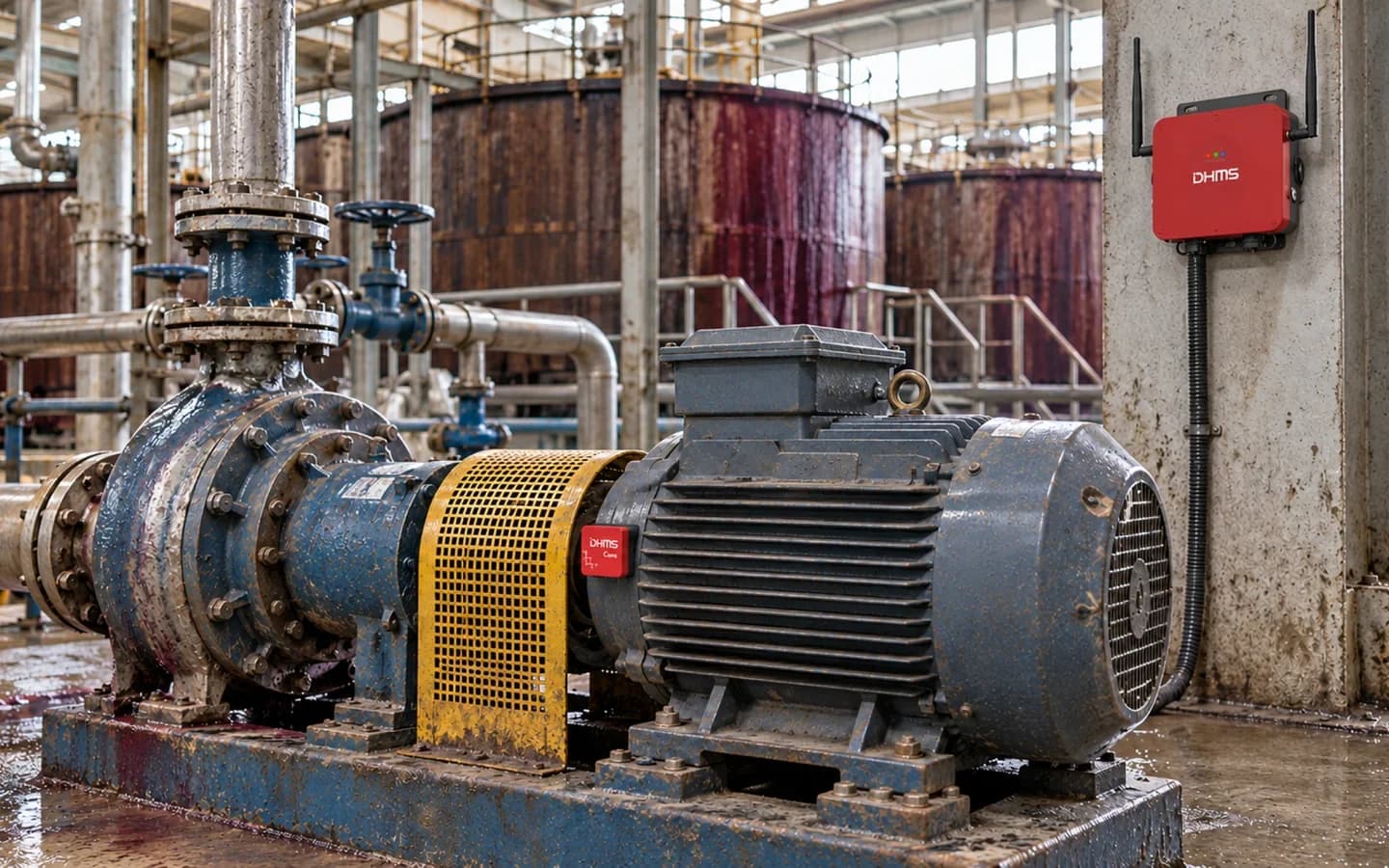
Wireless vibration and temperature sensors sit on each machine.
A typical production line needs about 15–20 sensors.
The sensors send data in real time.
DHMSCare’s industrial AI agent diagnoses each machine and recommends the next maintenance step.
Industry challenges
Screw air compressors and gearboxes run under sustained high load for long periods. That makes their failures hard to predict from routine checks.
Three-phase induction motors are numerous and spread across the plant. Manual rounds leave large blind spots between them.
A sudden failure on a critical machine stops the line. Downstream customer orders are delayed as a direct result.
Dust and heat in the plant accelerate wear on bearings and gears. Traditional methods cannot follow that wear in real time.
Quantifiable value
Monitoring solution
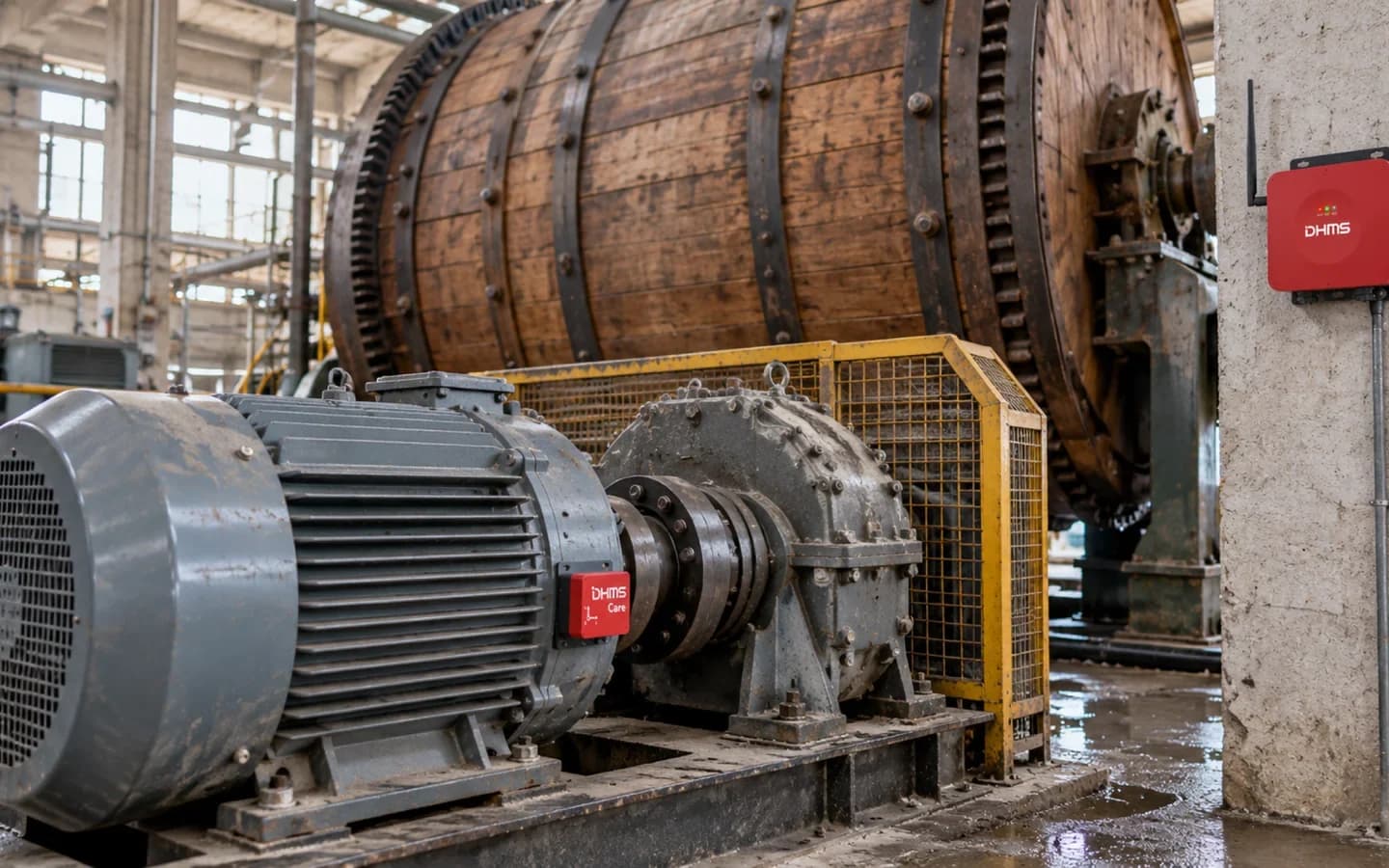
DHMSCare places sensors on the screw air compressors, the three-phase induction motors and the gearboxes that drive the plant’s production machines.
The sensors are wireless and IP69 rated, and they collect vibration and temperature data continuously.
From the day of installation, DHMSCare analyses that data and gives verdicts, with no months-long learning period.
Platform
DHMSCare uses AI to identify early fault signs such as gear wear and bearing anomalies, assess equipment health and provide maintenance recommendations.
Recommended measuring points and plan
What a typical production line needs, so you can see the whole plan before we talk.
| Asset | Suggested sensors | Measuring points (bearing seats) |
|---|---|---|
| Screw air compressor | 4 per unit | Motor DE and NDE, plus the drive-end and discharge-end bearing seats of the airend |
| Three-phase induction motor | 2 per unit | Motor DE and NDE; on larger drives, also the coupled machine’s bearing seats |
| Gearbox | 3 | Input and output shaft bearing seats, plus the intermediate shaft on multi-stage gearboxes |
| Gateway | DMG310 | DMG311 (4G) where there is no Wi-Fi |
| Per production line | approx. 15–20 |
Actual quantities are confirmed on site
AI Care
The first plan with AI fault diagnostics, the AI that finds the gear wear and bearing anomalies behind these results.
Choose AI Care Plus for unlimited automatic diagnostics, remaining-life forecasts with Mina Ultra and 24 months data retention.
Smaller teams can start on Care: AI condition monitoring and daily reports with 10 user accounts, then move to AI Care when you need AI fault diagnostics.
Start with one line
The smallest sensible start, then grow line by line or roll out plant-wide.
Watch the machines you can least afford to stop.
You learn about faults days ahead.
All your lines, all sites, on one dashboard.
Tailored to your project's requirements.
Runs on your own servers or private cloud.
Contracted and delivered as a project.
Can DHMSCare monitor rubber mixers, calenders and tannery drums?
Yes. DHMSCare monitors the motors and gearboxes that drive rubber mixers, calenders and tannery drums, and it already monitors compressors, motors and gearboxes at a leather and rubber group. A calender is a set of heavy rollers that presses rubber into sheets. For slow drums, tell us the shaft speed and we confirm the right sensor first; gearbox faults need the gearbox’s tooth counts entered before DHMSCare can track the gear-mesh frequency and its side frequencies.
Questions
We are a small or mid-sized company. Is this for us?
Yes. Start with one line and one gateway, subscribe per sensor per year, and begin on AI Care; Care if you only need condition monitoring.
How long does a one-line pilot take?
Installation follows the seven steps in our quick installation guide: create the equipment, mount the gateway, attach the sensors and bind the measuring points. We agree the pilot period with you by line size.
We have no vibration engineer. Can we still use it?
Yes. The AI identifies early fault signs, assesses equipment health and gives maintenance recommendations, and Mina tells you which machine to handle first and why.
Which equipment should a leather or rubber plant monitor first?
Start with the screw air compressors, then the three-phase induction motors and gearboxes that drive your production machines. These are the machines whose failures stop the line.
How many sensors does a production line need?
About 15–20 per line. That is 4 per screw air compressor, 2–4 per induction motor and 2–4 per gearbox.
Will the sensors hold up to the dust and heat in our plant?
Every DHMSCare wireless sensor is rated IP69, which makes it dust-tight and resistant to high-pressure, high-temperature water jets. The sensors are bonded to the bearing seats and need no cabling.
View all questions → Help center
Related case studies
 GT Radial (Gajah Tunggal)Indonesian tyre maker. DHMSCare watches the motors across its integrated tyre plant.View case study →
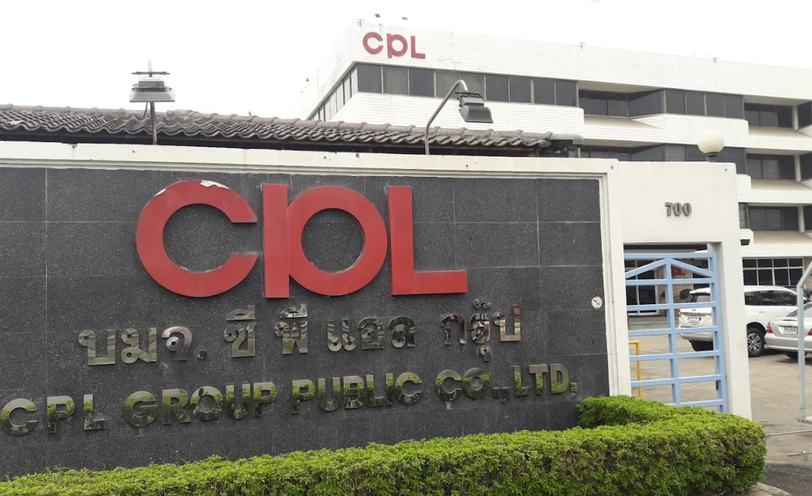 CPL GroupDiversified Thai listed group and a major finished-leather supplier in Southeast Asia.View case study →
GT Radial: predictive maintenance for a tyre plant’s motors
GT Radial, the tyre brand of PT Gajah Tunggal Tbk, runs a large integrated tyre plant in Indonesia with a big fleet of industrial motors. DHMSCare watches every monitored motor around the clock and warns the team before a fault interrupts production.
- Fault warnings 24–72 hours ahead
- Defect rate down 15–20%
- Energy use down 8–12%
CPL Group: steady air and power for leather lines in Thailand
CPL Group, a diversified listed group in Thailand and a major finished-leather supplier in Southeast Asia, relies on screw air compressors, induction motors and gearboxes to power its lines. DHMSCare monitors them, spots early wear trends and warns the team before an unplanned stop.
- Fault warnings 24–72 hours ahead
- Defect rate down 15–20%
- Energy use down 8–12%
Tell us the line and its critical assets; we size the sensors and the plan with you.