
Predictive maintenance for pumps
How do you catch cavitation and bearing wear in a pump before it shuts the line down?
A pump is one of the simplest rotating machines to monitor.
Cavitation, bearing wear and misalignment each show up in the vibration spectrum with their own signature.
DHMSCare sensors read those signatures on a fixed sampling schedule, and the AI names the fault before the pump loses performance.
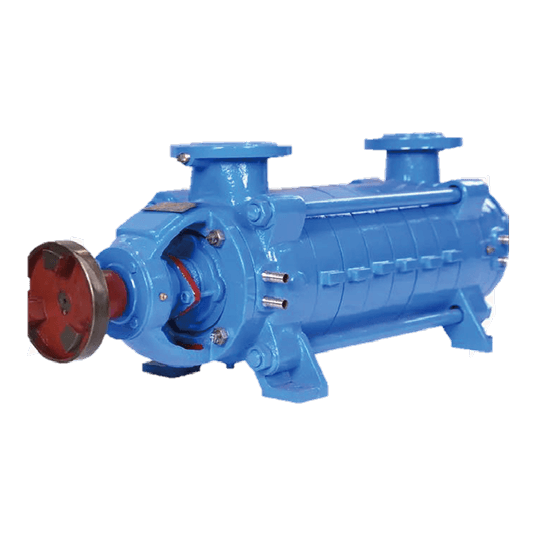
Typical faults
When the suction pressure drops, vapour bubbles form and collapse inside the pump. The spectrum fills with broadband high-frequency noise, and the pump sounds like it is pumping gravel. Left alone, cavitation eats the impeller.
The pump bearing races and rolling elements wear in stages. Early wear raises the high-frequency noise floor; pitting and spalling then add sharp peaks at the bearing characteristic frequencies.
When the pump shaft and the motor shaft are not on one line, the coupling fights itself. Misalignment shows as a strong peak at twice the rotation speed — and it shortens bearing life on both machines.
Loose foundation bolts produce a train of harmonics of the rotation speed, and the pattern grows as the looseness does.
Where sensors go
Sensors are bonded next to the bearing seats — no machine modification. Each sensor is bound to its measuring point in the app with a tap, and the gateway is wall-mounted nearby.
DT310 wireless vibration and temperature, 3-axis, 0–6000 Hz. Use DT311, with an external antenna, where a point sits inside an enclosed metal structure.
DMG310 (Ethernet / Wi-Fi): up to 60 sensors each, 60–80 m range in a typical plant (about 300 m line of sight). DMG311 (4G / Ethernet) for sites without Wi-Fi.
How to read a typical spectrum
A healthy pump shows a small peak at the rotation speed and a quiet high-frequency range. When cavitation starts, the high-frequency band rises into a broadband hump — the signature of vapour bubbles collapsing. The AI reads that rise alongside the overall vibration level, so the warning comes while the impeller is still intact.
Questions
Do I have to stop the pump to install sensors?
No. Sensors are bonded next to the bearing seats while the pump runs, and there is no machine modification.
How many sensors does one pump need?
Typically 4: two on the motor (drive end and non-drive end) and two on the pump bearing housings.
How do I tell cavitation apart from a bearing fault?
Cavitation raises a broad hump at high frequency that follows the suction conditions. Bearing wear grows into peaks at the bearing frequencies. The DHMSCare AI weighs both patterns when it names the fault. More detail in the help centre.
Map the measuring points on your equipment before the first call.