
Predictive maintenance for motors
How do you know a motor is drifting out of balance before it shakes its mountings loose?
The electric motor is where most monitoring plans start.
Unbalance, misalignment and bearing wear leave clear marks in the spectrum, and a motor drives the rest of the machine — so its health is the health of the line.
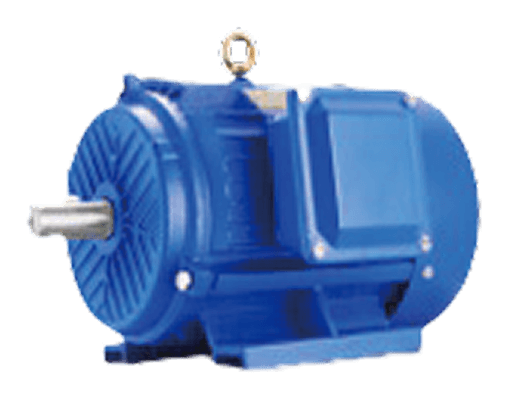
Typical faults
Mass that is not centred on the axis of rotation makes the motor shake once per revolution. Unbalance shows as a dominant peak at the rotation speed that grows with the unbalance.
A motor shaft that is not aligned with the driven machine loads the coupling and both bearings. The spectrum shows a strong peak at twice the rotation speed.
Motor bearings wear from load, alignment and lubrication problems. Early wear raises the high-frequency noise floor before any audible change.
Loose foot bolts or a soft foot let the motor rock on its base, and the spectrum shows a train of rotation-speed harmonics.
Electrical problems leave their own marks: a peak at twice the line frequency (100 or 120 Hz) points to the electrical side of the motor, and rotor bar or stator faults show up at their own frequencies. The same sensor reads them alongside the mechanical signatures.
Where sensors go
Sensors are bonded next to the bearing seats — no machine modification. Each sensor is bound to its measuring point in the app with a tap, and the gateway is wall-mounted nearby.
DT310 wireless vibration and temperature, 3-axis, 0–6000 Hz. Use DT311, with an external antenna, where a point sits inside an enclosed metal structure.
DMG310 (Ethernet / Wi-Fi): up to 60 sensors each, 60–80 m range in a typical plant (about 300 m line of sight). DMG311 (4G / Ethernet) for sites without Wi-Fi.
How to read a typical spectrum
A balanced motor shows a small peak at the rotation speed. As unbalance grows, that peak dominates the spectrum and climbs with the fault. Because the rotation-speed peak is easy to read, the trend over days and weeks is the clearest early warning.
Questions
Which machines should I monitor first?
Start with the motors you can least afford to stop. A motor that drives a gearbox, pump or fan is one of the highest-value measuring points on the line.
How many sensors does one motor need?
Typically 2 on the motor — drive end and non-drive end — plus 2 on the driven machine bearing seats.
Does the sensor disturb the motor?
No. The sensor is bonded next to the bearing seat and there is no machine modification. See the help centre for installation details.
Map the measuring points on your equipment before the first call.