
Predictive maintenance for gearboxes
How do you catch gear tooth wear before a gearbox failure stops the whole line?
A gearbox concentrates several failure modes into one housing: gear mesh wear, bearing wear and misalignment.
Each has its own frequency signature, and the DHMSCare AI reads them together so the fault is named before the gears pay for it.
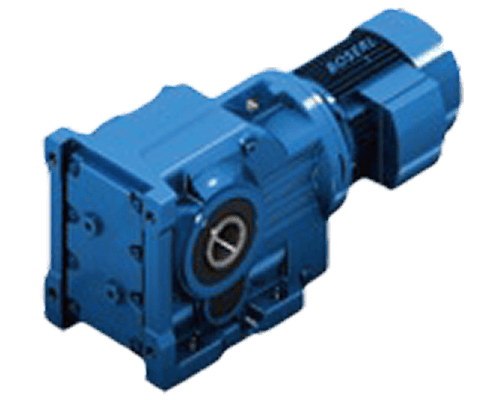
Typical faults
Worn or pitted teeth show up as sidebands around the gear mesh frequency, spaced at the shaft rotation speed. The sidebands grow with the wear — a higher mesh peak on its own can come from load or alignment, so the sidebands are the evidence to watch.
Gearbox bearings carry the mesh reaction forces. Wear shows first as a raised high-frequency noise floor, then as discrete peaks at the bearing characteristic frequencies.
A misaligned input shaft produces a strong peak at twice the rotation speed and uneven gear contact, which accelerates tooth wear.
Unbalance on the input shaft shows as a dominant rotation-speed peak that the gearbox passes on to its bearings.
Where sensors go
Sensors are bonded next to the bearing seats — no machine modification. Each sensor is bound to its measuring point in the app with a tap, and the gateway is wall-mounted nearby.
DT310 wireless vibration and temperature, 3-axis, 0–6000 Hz. Use DT311, with an external antenna, where a point sits inside an enclosed metal structure.
DMG310 (Ethernet / Wi-Fi): up to 60 sensors each, 60–80 m range in a typical plant (about 300 m line of sight). DMG311 (4G / Ethernet) for sites without Wi-Fi.
How to read a typical spectrum
Worn or pitted teeth show up as sidebands around the gear mesh frequency, spaced at the shaft speed, that grow over time. A higher mesh peak on its own can come from load or alignment, so the sidebands are what to watch.
Questions
How many sensors does one gearbox need?
Typically 4: input and output shaft bearing seats, plus the motor drive end and non-drive end.
Can the sensor see gear tooth wear directly?
Yes — gear mesh wear changes the vibration at the gear mesh frequency and its sidebands, and the AI reads that signature. See the help centre for how the spectrum is read.
Do I need to know the gear ratios?
Yes, the tooth counts. The gear mesh frequency is the number of teeth times the shaft speed, so enter the tooth counts (the nameplate or drawing has them) and DHMSCare tracks the mesh frequency and its sidebands.
Map the measuring points on your equipment before the first call.