
National coal-mine smart-building case: Luotuoshan coal preparation plant
Luotuoshan plant, a national coal-mine smart-building case, uses DHMS predictive maintenance to cut annual losses by RMB 2 million.
This article is based on the National Coal Mine Intelligent Construction Typical Case Collection, published by the National Energy Administration.
The collection includes 80 typical cases covering seven areas: information infrastructure, intelligent excavation, intelligent coal mining, intelligent open-pit mining, intelligent transport, intelligent disaster prevention and intelligent coal preparation.
The National Energy Group's Luotuoshan coal preparation plant uses DHMS's critical-equipment condition monitoring and predictive maintenance system, setting a benchmark for intelligent coal preparation.
Economic benefits: annual economic losses reduced by RMB 2 million; annual equipment repair costs reduced by RMB 1.5 million; annual personnel costs reduced by RMB 200,000.
DHMS built a data collection and network transmission channel for key equipment at the plant using an internet-based equipment management model, and established an information system for online monitoring and smart management of coal-preparation equipment, providing underlying IT support for smart coal preparation and smart mining.
The system warns of and pre-diagnoses early faults in key equipment, improving equipment-management efficiency, reducing the physical workload of operators, safeguarding production safety and offering strong demonstration value across the coal preparation industry.
Main work: fill the gaps in automation systems, enable predictive maintenance, digitise parameter records and fault diagnosis, lower repair costs, improve management efficiency and reduce unplanned downtime.
At present, coal preparation plants generally have fairly complete automation control systems that can perform interlocked remote start and automatic stop.
But as coal preparation moves toward fewer and even no personnel on site, the automation system lacks close monitoring of equipment condition: important parameters such as temperature and vibration at key points are not measured, so early faults are hard to detect in time.
Maintenance is usually scheduled or reactive. For important equipment, staff are often assigned to patrol on a schedule and record parameters by hand.
Personnel quality and inspection methods create major problems in supervision, accuracy and data archiving, making it hard to meet lean management requirements.
The critical-equipment condition monitoring and predictive maintenance system intelligently monitors and diagnoses rotating machinery.
Wireless vibration and temperature devices analyse temperature and vibration spectra at key points to detect early signs of loose bases, misalignment, foundation looseness, imbalance, bearing damage and gearbox damage.
Implementation: early warning and pre-diagnosis for electromechanical equipment at the plant, improving management efficiency, reducing operators' physical workload and safeguarding production safety.
Using an equipment management plus internet model, the project built a data collection and network transmission channel for rotating equipment and an information system for online monitoring and smart management, providing underlying IT support for an intelligent coal preparation plant.
The system combines industrial internet, wireless communication, smart sensing and cloud technology to develop a big-data-based online monitoring and predictive maintenance system for key equipment, applied to belt conveyors, centrifuges, coal slurry (mixing) pumps, vibrating screens, air compressors and other main equipment at the plant.
The project developed a high-precision, wide-band wireless vibration and temperature monitor (sensor) for online detection and analysis of vibration spectra and temperature at key points.
It uses a piezoelectric acceleration chip as the core vibration acquisition chip, along with a high-precision temperature chip, a wireless transmission module and a high-speed A/D conversion chip.
The team studied and built the working framework of the collector and designed the circuits between chips and modules so the collector can acquire and transmit vibration and temperature data.
The project developed a B/S-based cloud platform for online monitoring and predictive maintenance of coal preparation equipment, with cloud data analysis, storage and mobile presentation.
The platform uses big-data analysis to diagnose faults accurately and obtain historical trends for key parameters such as bearing vibration, giving users a basis for maintenance decisions.
The team studied fault characteristic parameters and frequencies of rotating machinery at the plant, evaluated equipment condition, enabled predictive maintenance, reduced repair costs and improved management efficiency.
Technical features and advanced nature: the system applies a new generation of IT to equipment health management in coal preparation, building full-lifecycle data management and analysis to achieve safe production, reliable equipment and easier management.
It can judge current condition and predict future condition, locate faulty components, analyse root causes, track degradation trends and estimate remaining useful life.
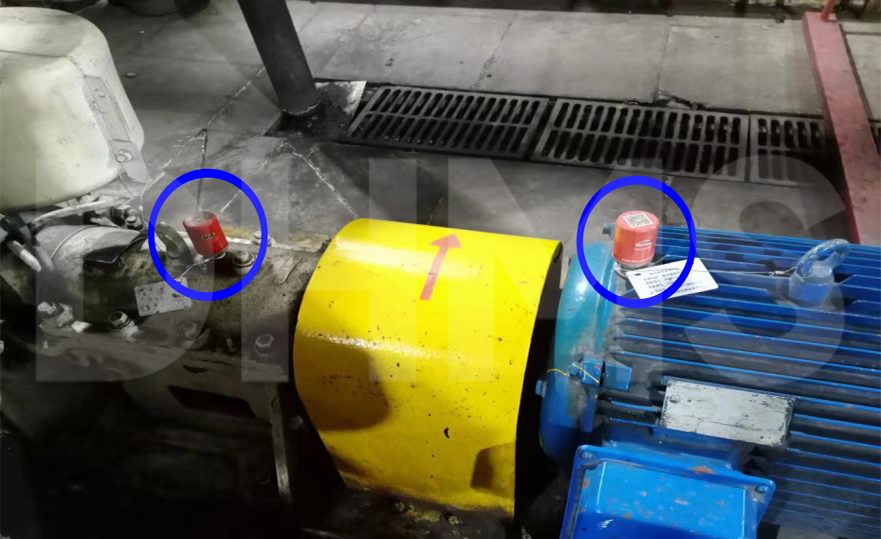
Vibration-temperature sensors are installed at bearing locations to monitor dynamic vibration waveforms and temperature online. The monitored equipment includes key plant equipment such as water pumps, vibrating screens, belt conveyors and centrifuges.
The system can diagnose faults including loose foundation bolts, structural looseness, structural resonance, insufficient stiffness, imbalance, misalignment, looseness and resonance; bearing inner/outer race spalling, rolling-element spalling, cage scraping, fracture, shaft currents and bearing rubbing; and gear tooth wear, scuffing and tooth breakage.
The system enables health management of electromechanical equipment, effectively reducing maintenance effort and workload, using data to drive predictive maintenance, achieving high efficiency and low cost, and improving equipment utilisation and economic benefits.