
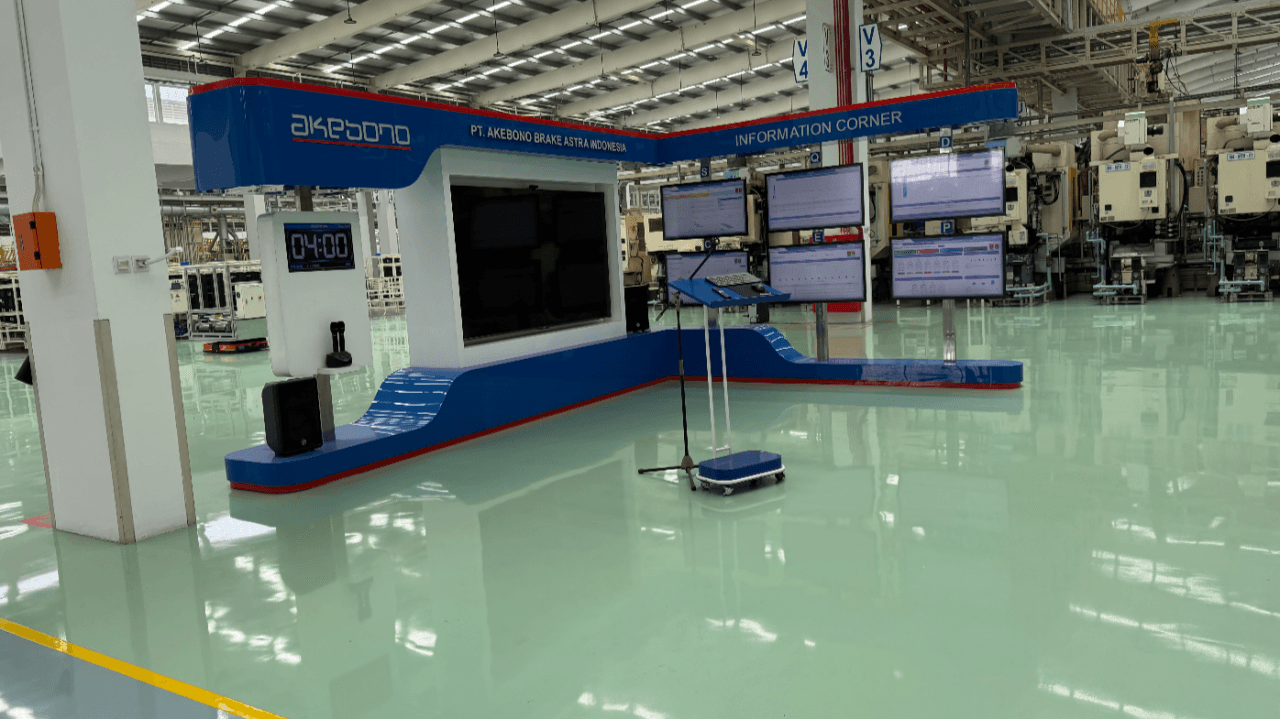
Akebono Brake Astra
Precision machining and manufacturing of automotive brake-system components (OEM and aftermarket)
- 50%Reduce Unplanned Downtime
- 80%Shorten Fault-Localization Time
- 30%Reduce Misdiagnosis Repair Costs
About the customer
Akebono Brake Astra is one of Indonesia's leading brake-system manufacturers, serving both OEM and aftermarket channels across Southeast Asia. Brake-component machining is unforgiving: tolerance drift propagates straight into pad-rotor contact behavior, which propagates into vehicle braking feel — there is no acceptable margin. Within the plant, a single high-precision chamfering grinding cell stands between raw forgings and finished brake parts ready for assembly; lose that cell to a vibration event and the whole line stops within minutes.
The challenge
In one of the plant's chamfering grinding cells, the Grinding03 motor — a continuously-running, high-speed industrial motor — is the heart of the operation. It runs under heavy continuous load for full shifts at a time, producing finished chamfer geometry on brake-component forgings. The cell is the only station on the line that delivers the final edge geometry on brake forgings before they move into inspection and assembly — it is not a "nice to have."
Chamfering Grinding Motor: High-speed, continuous heavy-load operation makes it the power core of the cell; its vibration signature captures both the motor's own condition and any structural vibration transmitted into it from upstream or downstream.
Linear Slide and Guide Bearings: Located on the workpiece feed path upstream of the motor, carrying transverse cutting force; once the guide bearings develop micrometric play, cutting produces micro-collisions that transmit into the surrounding structure.
In precision automotive-component machining, single-point bottleneck economics are punishing: lose this cell for a shift and you lose the shift's brake-component output; lose it for a day and downstream assembly cells start running dry. For a plant feeding OEM and aftermarket customers under firm delivery commitments, multi-day downtime cascades into delivery penalties, expediting costs, and trust damage — and the cost of a wrong diagnosis is not the maintenance labor, but the production day spent chasing the wrong component.
Healthy at Idle, Violent Under Load — Invisible to Patrol Inspection
At idle the motor ran beautifully — quiet, stable, no vibration to the touch; the moment the cell took up cutting load, the entire machine began to shake violently. A bearing failure? Metal-to-metal contact in the structure? A loose foundation bolt? With idle and load behaving so differently, traditional patrol-style inspection came up empty and the team could not even narrow down where to start looking.
A Single-Point Bottleneck Where Downtime Cascades
The chamfering cell is the only critical station on the line, so a stoppage means losing the entire shift's output; under firm delivery commitments, a wrong diagnosis costs not maintenance labor but the whole production day spent chasing the wrong component, cascading downstream into delivery delays and trust damage.
Products and deployment
- Software ProductDHMSCare - AI Care Version
- Terminal ProductDHMSCare wireless vibration and temperature sensors and smart gateways
- Monitoring scopeChamfering grinding motor (Grinding03 high-speed industrial motor), linear-slide assembly and guide bearings, workpiece feed mechanism, motors and pumps
Related case studies
Explore plans and packages, or start with a trial.